

You typed electrical van wrap into Google. You got vinyl shops. Print shops. A map pack of installers who will take a clip-art lightning bolt, drop it on last month's Express template, and call it a wrap.
Wrong shop.
Jeremy Ellsworth Designs draws the brand that goes on the van. We do not own a laminator and we do not schedule bay time. Your local installer prints and hangs the vinyl. We hand them files that are actually worth hanging. Design first. Then the shop.
If you want the install, call a wrapper. If you want a van that still gets the call when the breaker trips on a Saturday, start here.
You typed wrap. Google sent you to a printer.
An electrician searching that phrase is usually buying the last step first.
The installer is good at templates, panel cuts, laminate, and getting film to sit on a door that opens a hundred times a week. They are not a brand studio. They will not talk you out of a stock bolt and a service list. They will put it on the van, because that is the job you paid them to do.
The market trains you to think wrap means vinyl. It does not. Vinyl is the skin. The brand is the reason anyone looks at the skin.
A print shop will take whatever you send. A vehicle wrap design starts before anyone orders film: a mark that can live at eight feet, a hierarchy a homeowner can read from the other lane, and a layout built for your body style. Toolbox truck is not a cargo van. A cab-and-chassis is not a Silverado. If you already have a wrapper you trust, keep them. We design. They print.
We already wrote the general version at vehicle wraps that sell, and the HVAC version at HVAC truck wrap design. This one is for electricians. The search is different. The clutter is different. The van in a driveway on a no-power is a billboard or a blank.
Two seconds at 40.
A homeowner does not study your van. They glance.
They are in the other lane, in a school pickup line, or two cars back at a red light while your helper pulls a panel. They get about two seconds. In that window they can take in a name, a trade, a phone number, and a mark they can point at. That is the list. Everything else is noise they will not remember when the lights go out.
This is not a design-school rule. It is what happens at 40 miles an hour. You already know the company name. They do not. They need a picture they can keep.
Electrical work is invisible until it fails. Nobody tours a load center the way they tour a kitchen. The brand has to do the remembering for years, between the two times they actually need you. A van that only says 24/7 and a stack of manufacturer badges does not get filed. A van with a name they can say out loud does.
If they cannot tell you are the electrician after the glance, the wrap did not do its job.
Name, phone, electrician. That is the whole panel.
Hierarchy is the part most electrical wraps get wrong, and it is the part a shop will not fix for you.
Name.
The biggest thing on the body. Not the slogan. Not the URL in the same weight as the name. The name.
Phone.
One number, large enough to dial from a driveway. Not a phone and a website and a QR code and a booking badge all fighting for the same door. A QR can live on the van. It cannot be the thing you expect someone to hit at speed.
Trade.
Electric. Electrician. One line. Not a stacked list of panel upgrades, EV chargers, generators, recessed lights, ceiling fans, and smart-home packages. That list belongs on the site and the estimate. On the van it turns into fog.
Face.
A mark with a silhouette. Something a kid in a car seat can still describe when you are gone. Initials in a badge do not do this. A photo of a meter base does not do this. A clip-art lightning bolt does not do this, because it already lives on four other fleets at the supply house.
That last one is the electrical tell. We see vans that look like a product catalog: a Wall Connector, a standby generator, a smiling tech, four manufacturer logos, licensed-bonded-insured in the same size as the company name, and the phone number squeezed into a footer. That is a collage, not a brand. From forty feet it is mush.
A wrap is not a brochure you drive. It is a sign that moves. If the face is what people remember, the rest of the system can carry the details: the brand identity on the estimate, the site they Google after they saw you, the shirt on the tech at the door. The longer case for a character is here: why mascot logos win for home service brands. If the van is the ad, give the ad a mark they can point at.
- Name. Biggest thing on the body.
- Phone. One number, driveway size.
- Electrician. One trade line.
- A mark they can point at.
The supply house lot is already full of the same van.
Pull into CED. Or Platt. Or Graybar. Count the white Express vans.
Same body. Same ladder rack. Same bolt. Same bold font that came with the computer. Same phone number under a service list because that is what the last shop did. Some are still plain white. Most spent real money to look like each other.
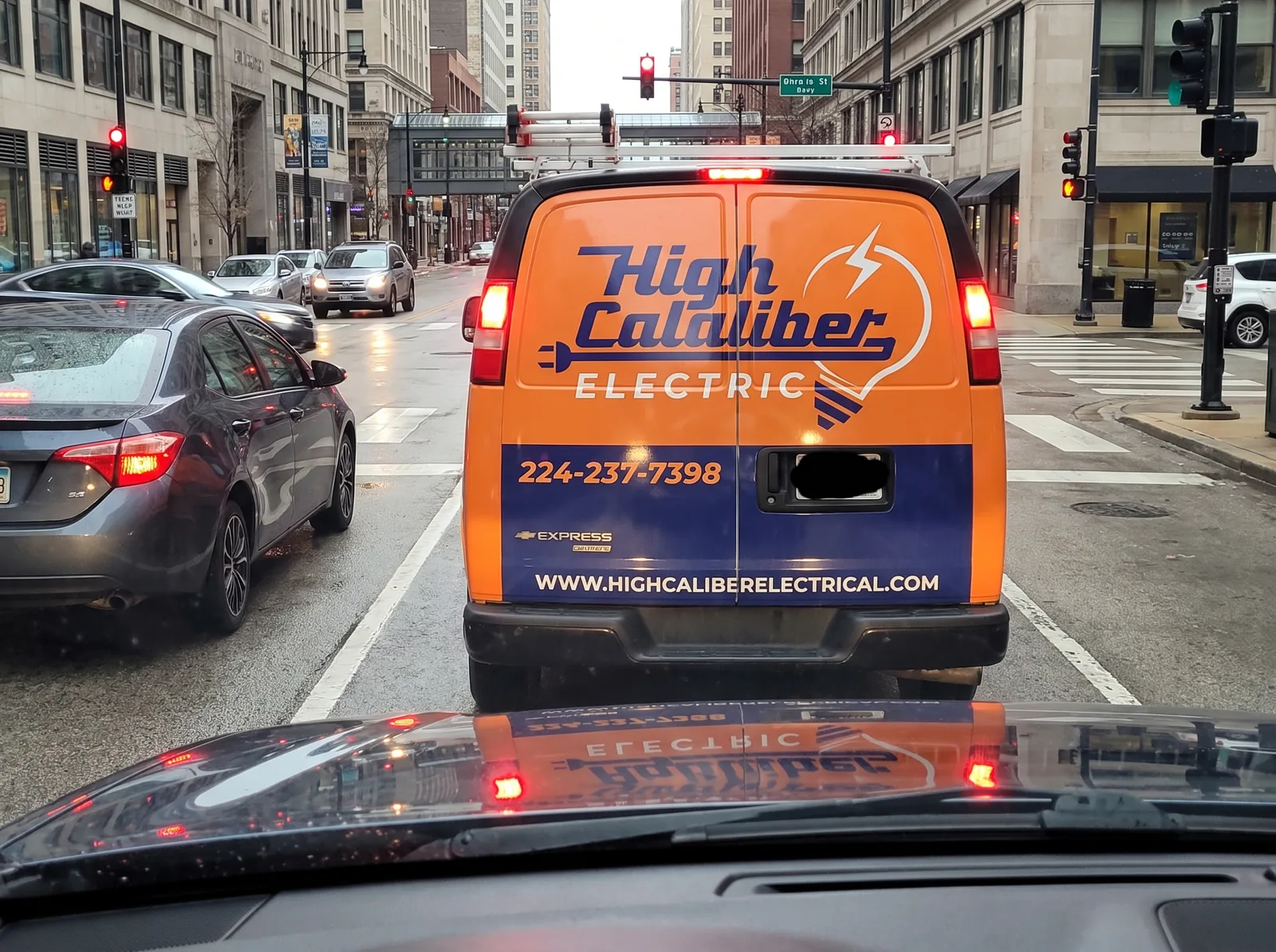
Homeowners do not keep a spreadsheet of electricians. They keep a picture. If your van is the same picture as four others on the same street, you are in the pile. When the breaker trips, they call the one they can describe. The white van is not a description. The orange one with the bulb on the side is.
You cannot letter your way out of that. Bigger type on the same layout is still the same layout. The fix is a brand that does not already exist on the next truck over: a hand-drawn mark, a color that is yours, a hierarchy that reads as one company. That is home service branding, not a wrap special. If the mark is generic, the vinyl only makes the generic bigger.
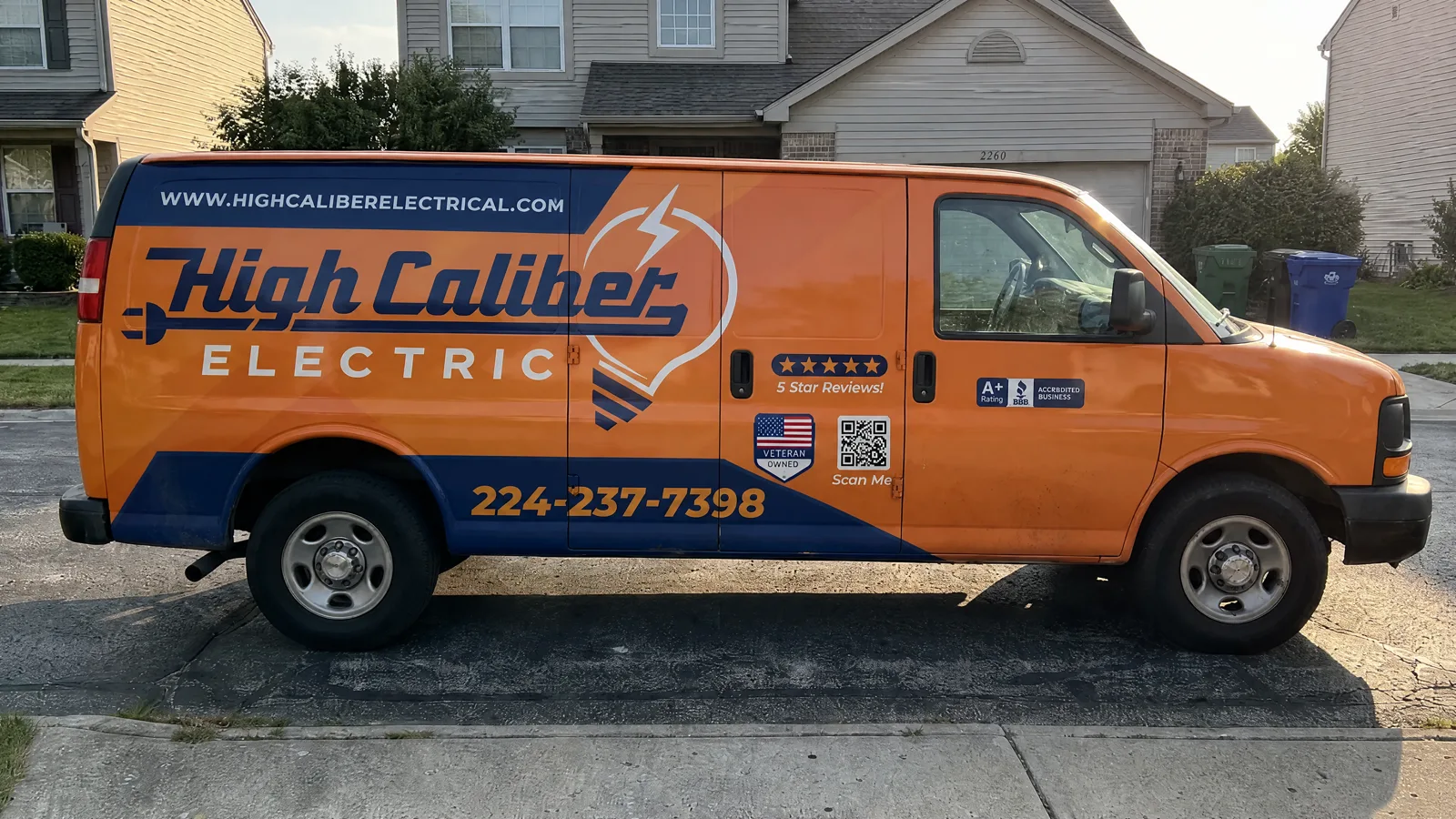
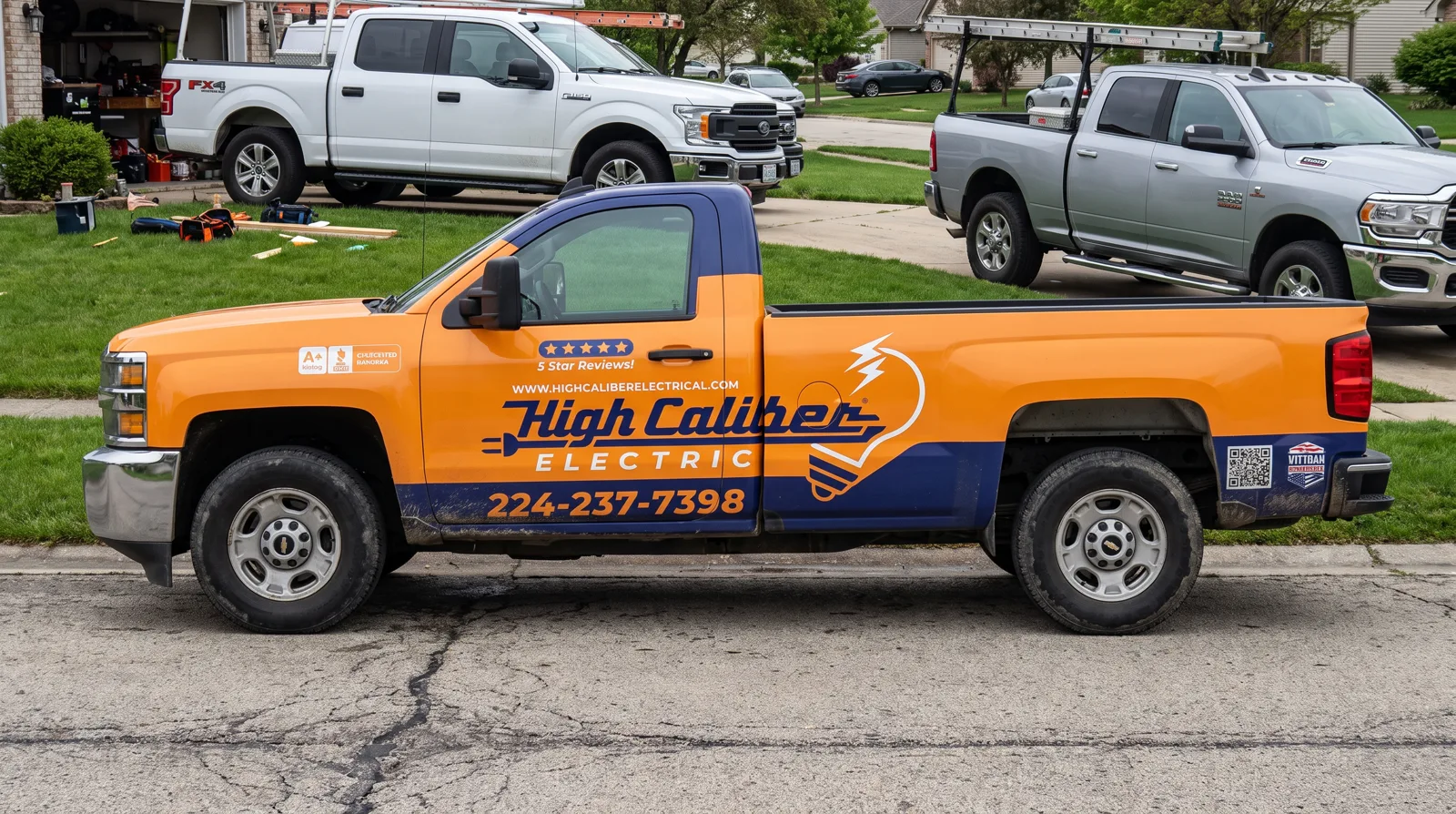
High Caliber Electric: wrap, cards, and a flyer that share one door.
This is not a made-up fleet. The work is live: High Caliber Electric.
Orange and navy. A plug that becomes a bulb. High Caliber in a heavy italic. ELECTRIC in one clean line underneath. One number on the rocker: 224-237-7398. The URL stays small. The veteran shield, the BBB mark, and the QR sit on the body. They do not lead. The door still reads name, trade, phone.
That hierarchy had to survive more than one body. A K3500. A Silverado. A Chevy Express. An F-250 with a toolbox. On the service-body truck the bed stays white and the cab still has to carry the company. Partial wrap is not a lesser wrap if the door still does the job.
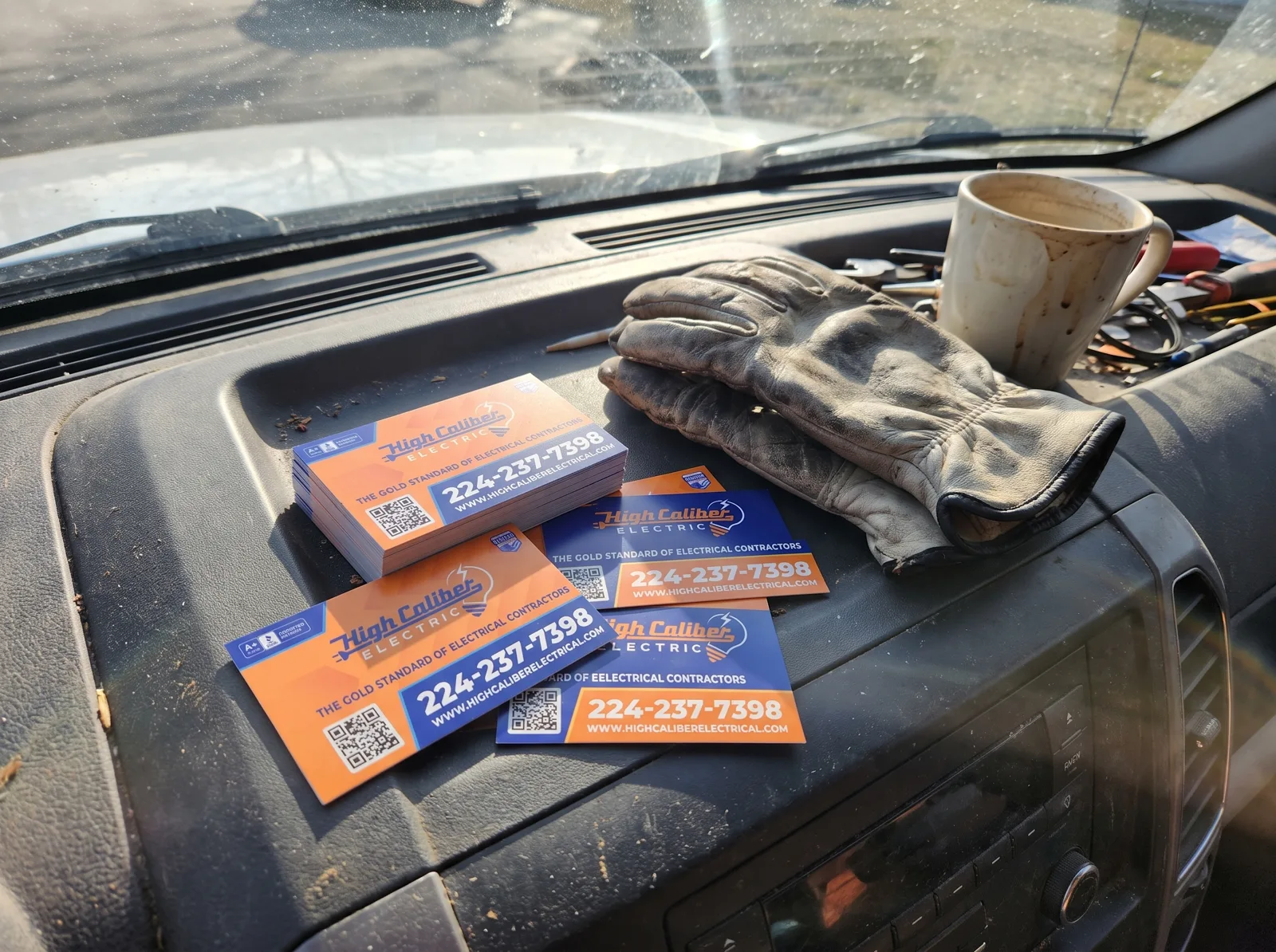
The cards do not invent a second brand. Two colorways, same split, same mark, same number, same tagline under the name: The Gold Standard of Electrical Contractors. That line belongs on a card you hand across a kitchen counter. It does not need to be the biggest thing on a truck doing 40.
The flyer is allowed to talk. Loyalty club. Why join. The offer. A photo of the wrapped van so the paper matches the street. QR, veteran mark, BBB mark, phone, URL. That is the right place for a membership pitch. Put that copy on the van and you turned a sign into a pamphlet nobody can finish from the other lane.
Name. Phone. Electrician. That is the whole panel.
Vinyl will not rescue a cheap lightning bolt.
Here is the expensive mistake.
You buy a logo from a gig page. Or you prompt one. Or you grab a clip-art bolt and a bulb that belongs to nobody. Then you take that file to a wrapper and ask them to go eight feet wide.
The wrapper will try. They are not the problem.
A clip-art mark falls apart when it leaves a phone screen. The edges go soft. The electric guy looks like the same guy on three other fleets, because it is. An AI mark has the same disease plus extras: mushy detail, a bolt that will not hold as a one-color, a silhouette you cannot read at speed. Cheap reads cheap. A homeowner prices your work by the truck they saw. A generated tech holding a meter he did not earn tells them you cut corners before anyone rings the bell.
Vinyl is honest. It will print exactly what you gave it, at the size of a wall. If the drawing is weak, the street will see it. If the file is a flattened web PNG, the street will see the pixels.
We draw by hand. In-house. On paper first. Then we build the mark so it survives a door, a hood, a navy shirt, and a dirty fender. If your current mark cannot do that, do not wrap it. Fix the identity first. Wrapping a bad logo is how you pay twice: once for the film, again for the rewrap.
Wrap-ready files, not a mood board.
What you walk away with from this studio is not a Pinterest board and a handshake.
You get a layout on the actual vehicle. Sides, hood, rear, and the pieces a wrapper has to treat as separate panels. Type where the body is clean, not across a handle that will cut a face in half. Color that holds contrast in sun and at dusk. The mark on the panel that can carry it.
You get files a shop can use. Vector where it has to stay sharp. Print-ready art, not a screenshot. Notes so the installer is not guessing which door gets the number. AI, SVG, PDF, PNG, JPG: the same kit we hand over on identity work, built for the van.
Then your installer prints. You own the art. Take it to the wrapper you already trust. Design the brand. Hand over the kit. Stay out of the bay.
If you need the identity under the wrap, start at logo and branding. If you need the van and the rest of the street kit, start at home service branding. If the fleet is the hole and the mark is already earning, start at vehicle wraps. Look at High Caliber Electric if you want to see the wrap, the cards, and the flyer in one place.
A mood board is a conversation. A wrap-ready file is a truck that can leave the shop.
Design first. Then call the installer.
An electrician van wrap that is actually a brand is not a print-shop upsell. It is a drawing that can survive the other lane, a hierarchy that does not panic, and files your wrapper can hang without inventing the company for you.
Name. Phone. Electrician. No manufacturer collage. No AI tech. No lookalike lettering on a white van you already paid to make forgettable. If that is the van you want, we will draw it.
Click Get a Quote at the top of je.design. That button is in the header. It opens the form. If you would rather talk it through, Schedule a Call. Or go look at the work, starting with High Caliber Electric.
Questions electricians ask
Do you install the wrap, or do I still need a local shop?
We design. Your installer prints and installs. Keep the wrapper you trust. We give them wrap-ready files and a layout built for the vehicle, not a mood board they have to reverse-engineer.
Can you design an electrical wrap if I already have a logo?
Yes, if the mark can survive a door at speed. If it is clip-art, a flattened web file, or an AI bolt that falls apart at eight feet, we will tell you before anyone orders vinyl. Sometimes the wrap is the job. Sometimes the identity has to go first.
I run a service-body truck, not a cargo van. Partial or full?
Start with the side a homeowner actually sees: the cab in the other lane and the rear at a light. On an F-250 with a toolbox, the bed is already busy. A strong cab wrap with a big number often beats covering every compartment door. A full wrap is right when the brand can carry the whole body. We will not upsell film you do not need so a shop can bill more square feet.
What do you need from me before the wrap layout starts?
The vehicle: year, make, model, and clear photos of each side, plus any racks, toolboxes, or damage a template will not show. The phone number that should live on the van, not three numbers at equal size. The trade line you want people to remember. If you have a wrapper already, their name and any template they prefer. That is enough to start.
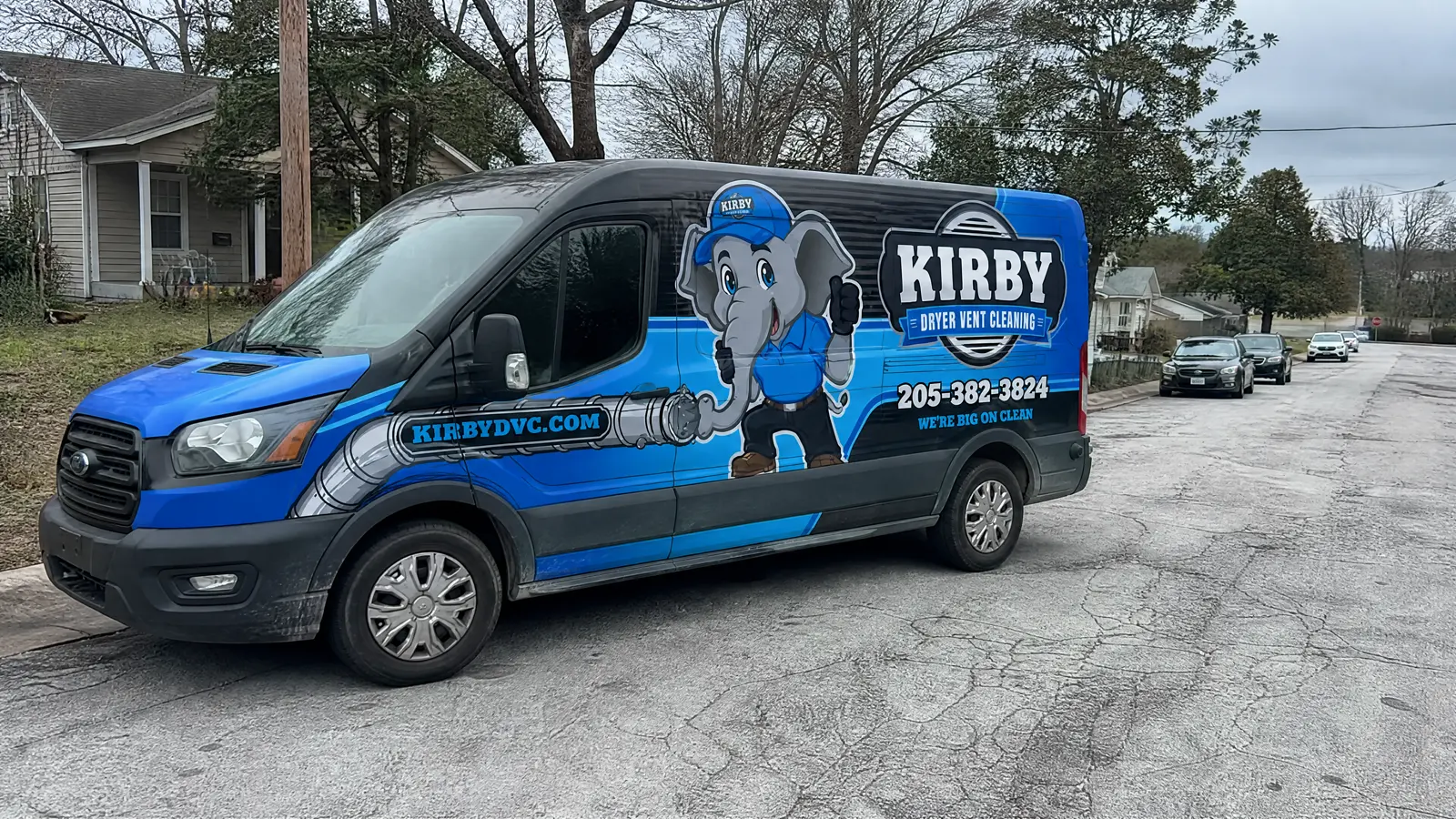
That 70,000 Number Is Not a Study
Wrap shops quote 30,000 to 70,000 looks a day. That range is not a published study. Real out-of-home research is about notice, then the phone search after.
2 min read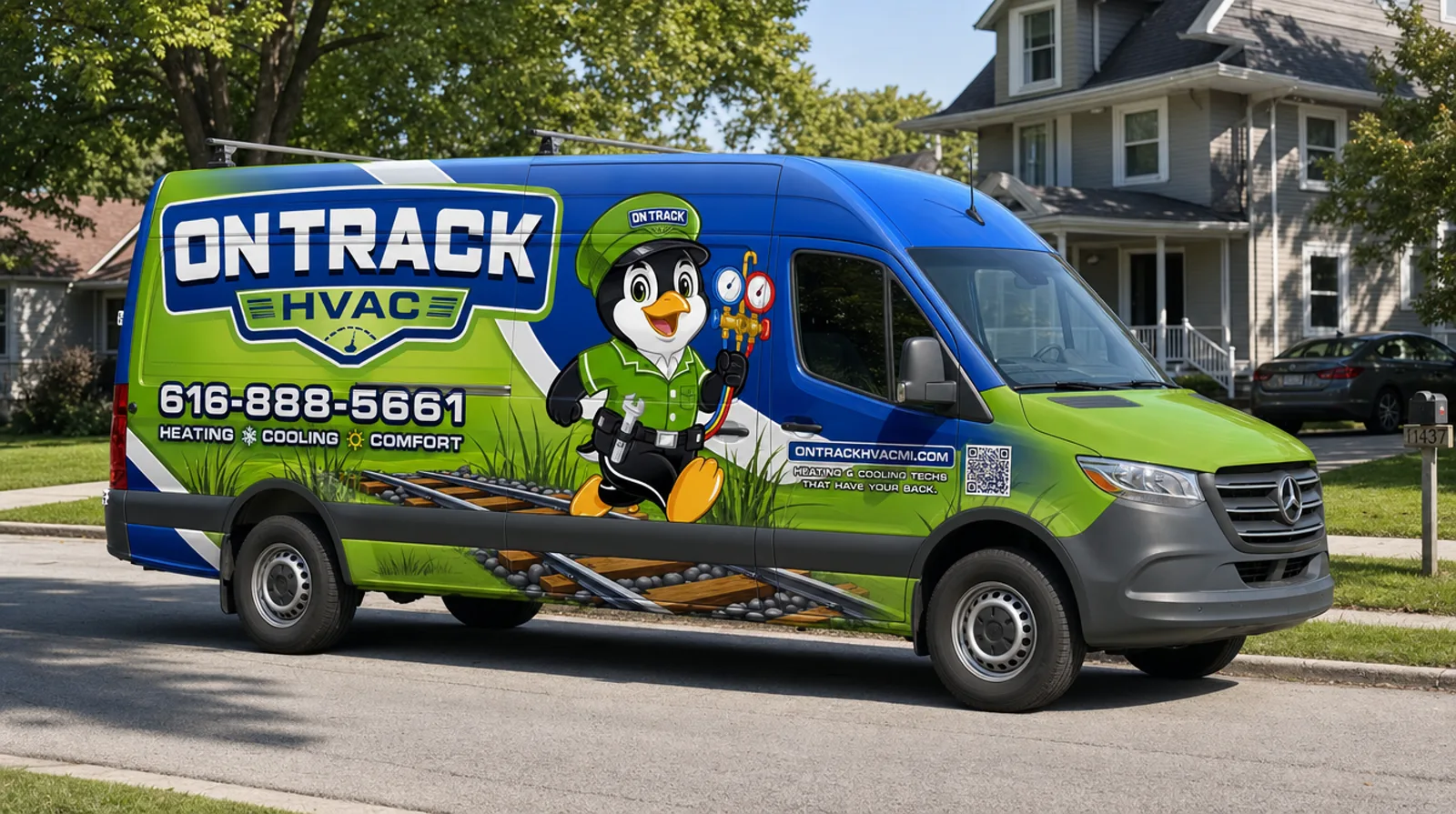
HVAC Truck Wrap Design That's Actually a Brand
Why most HVAC truck wraps fail in three seconds from the other lane, and how a hand-drawn brand on the van gets you the call. Design first, then the shop.
3 min read
Why Mascot Logos Win for Home Service Brands
Yard signs fade and radio spots get skipped — but nobody forgets the company with the character. Here's why mascots outperform initials-in-a-shield for HVAC, plumbing, roofing and every trade in between.
5 min read